Hazelgrove Lending Group helps chiropractors, physical therapists and optometrists in Redding, CA and Shasta County compare business loans: equipment financing for tables, therapy and diagnostic devices, term loans for practice purchases and build-outs, and working capital. Shasta County counted 127 such offices in 2023. This page covers their cash cycle, purchase costs and partner review.
| Offices of other health practitioners (2023) | 127 |
|---|---|
| Under five employees | 63.0% |
| In ZIP 96001 | 59 |
| Nonemployer offices (2024) | 319 |
| Needs this page covers | Treatment and diagnostic equipment, purchases |
| Structures to compare | Equipment agreements, then term loans |
A visit-driven cash cycle
These practices earn per visit or per exam, from a mix of insurance, cash-pay plans and, for optometry, eyewear sales. Revenue rises with the number of patients the schedule can hold, so the funding question can be whether a new device or room will add enough visits to pay for itself.
Optometry has an inventory side the others lack: frames and lenses bought from suppliers and sold through the optical. That makes optometry business loans a mix of equipment and stock, while chiropractic and physical therapy funding can lean mostly on equipment and space.
Chiropractic practice loans and equipment
Chiropractic business loans can pay for adjusting and decompression tables, digital X-ray, laser and soft-tissue devices, and the room fit-out to house them. Chiropractic equipment financing ties each device to its own payment, which keeps the practice's working cash free for payroll and rent.
Business loans for physical therapy
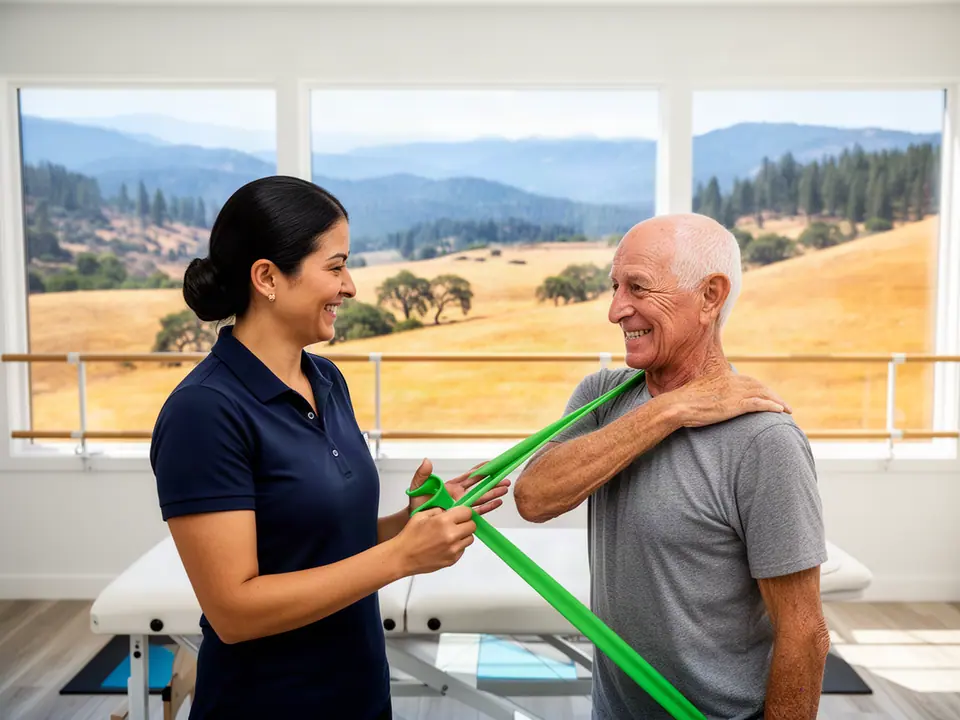
Physical therapy business loans can fund a larger footprint: gym space, treatment tables, parallel bars, aquatic or cardio equipment and documentation systems. Because a therapy clinic may employ several therapists and aides, payroll timing against insurance payments matters as much as equipment; see the working capital page for that side.
Optometry equipment financing and practice purchases
Optometry equipment financing covers exam lanes, phoropters, retinal imaging, OCT and visual field analyzers, and lab edgers. Frames and lenses for the optical are stock, which partners may finance separately or through a line of credit.
What it costs to buy an optometry practice has no single answer, and no figure is quoted here. The price depends on collections, the patient base, the optical's sales, the equipment and the lease, and a valuation usually sets it. Partners reviewing a purchase look at the seller's records for the last few years and at whether the patients are likely to stay with the new owner.
Illustrative example: will a new device pay for itself?
Hypothetical figures, not an offer. A practice prices a diagnostic device at $48,000. Financed over 60 months at an assumed annual rate of 10 percent, the payment is about $1,020 a month. If each added visit or exam using the device brings in $85 net of supplies, the practice needs roughly 12 extra billed visits a month to cover the payment, before counting the time it takes to deliver them.
Run that division with your own visit value. If the schedule cannot absorb those visits, a smaller device, a used unit or a lease may fit better than the full purchase.
Cash-pay plans, memberships and what partners make of them
Some chiropractic and therapy offices may sell visit packages or monthly memberships, and optometry offices may sell eyewear plans. Prepaid plans bring cash in early, which helps, but partners see that money as owed service rather than pure income: if many patients prepay and then stop coming, the office still has the obligation. Show recurring plan revenue separately from per-visit insurance billing when you apply, so a partner can see how steady each stream is.
For an optometry practice, the optical's sales and frame inventory deserve their own line too, because they behave like a small retail store inside the practice.
Moving from a shared room to a full clinic
Some practitioners begin by renting a room in another office and later move into their own space. The move adds a lease, a build-out, front-desk wages and more equipment at once. Partners reviewing that step look at the practitioner's visit history in the shared space, so keep clean records of visits and collections from the start.
Other health practitioners in Shasta County, CA
County Business Patterns groups chiropractors, optometrists, physical, occupational and speech therapists, and other practitioners under offices of other health practitioners (NAICS 6213). Shasta County counted 127 such employer establishments in 2023, 80 of them (63.0%) with fewer than five employees, and 59 with a ZIP 96001 address.
Nonemployer Statistics counted 319 offices in the same NAICS 2022 group with no paid employees in 2024. The two programs are reported separately because they cover different businesses and years, and the counts are not compared.
What partners usually review
- Visit or exam volume and collections
- Recent bank statements and tax returns
- The equipment quote, with make, model and price
- If you are buying a practice: the seller's books and the sale contract
- Existing leases on equipment and space
Related pages: physician practices, dental offices, the working capital page for payroll and the full industry list. County data is on the Redding, CA page.